Understanding Brain Lesions: 7 Causes Doctors Rarely Explain
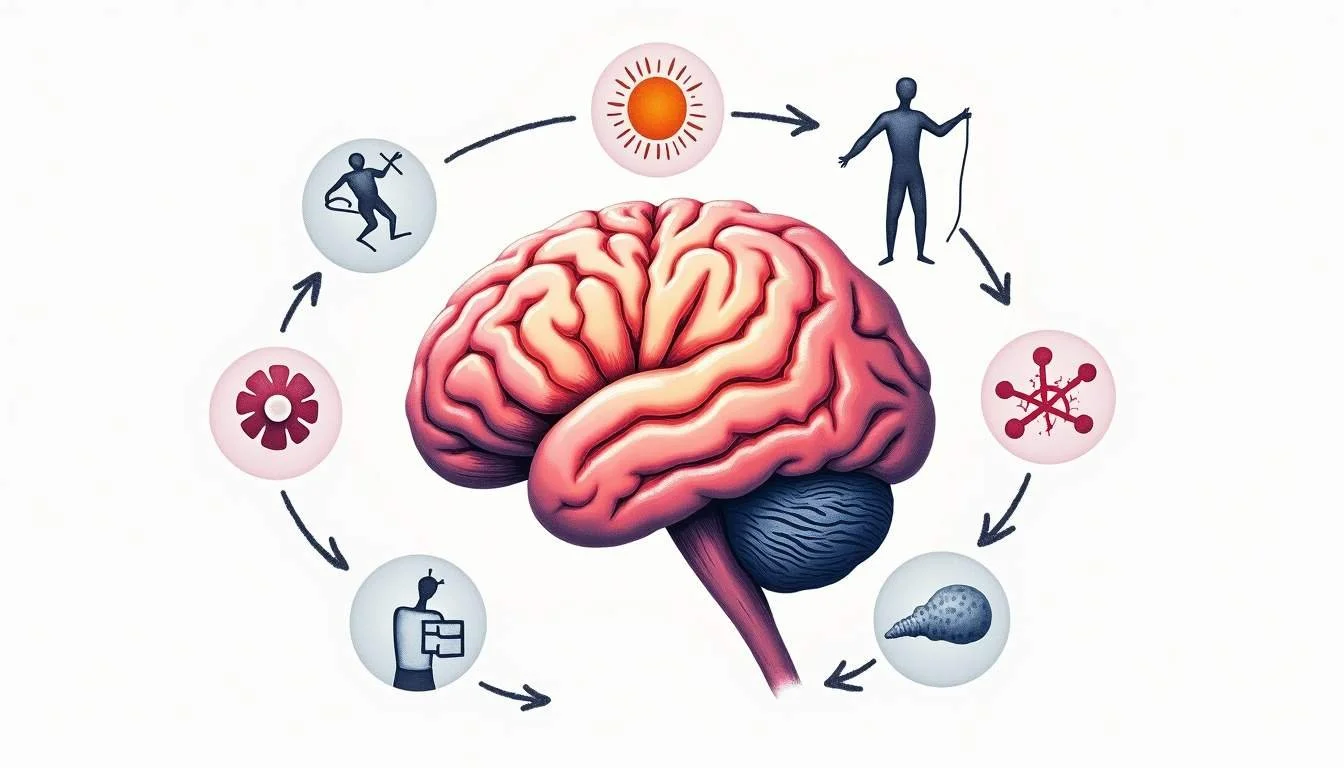
A radiology report that suddenly mentions “multiple brain lesions” can feel like the floor dropping out from under you. The word “lesion” sounds permanent, dangerous, and mysterious, and too often patients walk out of appointments with a stack of images but very little explanation. Yet many lesions are small, slow-growing, or even clinically silent for years, while others demand rapid, aggressive treatment. Knowing what actually causes them helps draw a line between what is urgent, what is manageable, and what is simply something to watch.
Neurologists and radiologists deal with brain lesions every day, which can make the topic feel routine to them and deeply unsettling to everyone else. Some are scars from old injuries, some are tiny blood spots in aging blood vessels, some are the footprints of infection or inflammation. A large study of cerebral microbleeds, for example, found that these tiny spots of bleeding are far more common in older adults than earlier research had suggested, challenging the idea that every new lesion is rare or catastrophic in later life in that analysis of microbleed prevalence. When people understand what type of lesion they are dealing with and why it formed, fear often gives way to clearer decisions and better questions for the medical team.
Why “Brain Lesion” Is A Broad, Often Misunderstood Label
One of the biggest sources of confusion is that “brain lesion” is not a diagnosis; it is a description. On imaging, a lesion is simply an area of brain tissue that looks different from what is expected. That difference might come from a bruise, a tiny bleed, a tumor, a patch of inflammation, a scar from an old stroke, or even a developmental quirk present since birth. All of these wear the same label on a report, even though their causes, risks, and treatments are very different.
The brain also has limited ways of responding to damage. Swelling, loss of blood flow, bleeding, and demyelination (damage to the insulation around nerve fibers) can each show up in overlapping ways on MRI or CT scans. This is why radiologists talk about what a lesion “most likely represents” and suggest follow-up imaging or clinical correlation. The real question for patients is not just “Is there a lesion?” but “What type, from what cause, and what does that actually mean for daily life?”
Cause: Tiny “Silent” Bleeds In Aging Brains
As people get older, small blood vessels in the brain can become fragile and leak tiny amounts of blood. These pinpoint leaks, called cerebral microbleeds, often cause no obvious symptoms at the time. They are too small to feel like a stroke, yet they leave tiny dark spots on MRI that show up as lesions. For someone who has an MRI for headaches or dizziness, discovering several of these can be alarming if no one explains how common they are in later decades.
Research has shown that microbleeds are much more frequent in older adults than many clinicians assumed in the past, reinforcing that “abnormal” on a scan does not automatically equal “disease that needs urgent treatment” for every person. The important questions are whether the number and pattern of these tiny bleeds fit with high blood pressure, small-vessel disease, or other vascular problems, and whether they increase the risk of future strokes or cognitive decline. Good blood pressure control, careful use of blood thinners, and attention to vascular health often become the main strategies rather than any direct surgery or procedure on the lesions themselves.
Cause: Traumatic Brain Injury From Blows, Falls, And Crashes
Traumatic brain injury is one of the most common ways new lesions appear on scans. A fall, a sports collision, an assault, or a motor vehicle crash can cause the brain to move rapidly inside the skull, stretching and tearing delicate tissue and blood vessels. Some injuries are obvious, with loss of consciousness and bleeding; others are mild concussions that never get scanned at the time. Either way, the brain can be left with bruises (contusions), tiny bleeds, or diffuse axonal injury that later show up as scattered lesions.
An industry report estimated that about 69 million people worldwide experience a traumatic brain injury every year, with high‑income countries reporting roughly 1,299 cases for every 100,000 people annually according to that global traumatic brain injury analysis. That enormous burden helps explain why clinicians sometimes underplay the long tail of symptoms that can follow. Problems with attention, irritability, headaches, and sleep can persist long after the visible lesions stabilize. Even when imaging looks “better,” brain networks may still be rewiring and struggling to compensate for damaged connections. Understanding that a lesion from a past injury can still shape mood, memory, or impulse control today can be relieving for families who have watched personality changes unfold without knowing the physical reason behind them.
Unsure what your scan results really mean?
We analyze MRI, CT, PET, Ultrasound, and X-ray reports and deliver a clear, easy-to-understand summary in under 1 minute.
- Understand your results in simple language
- Easy to understand explanations
- Get a list of questions to ask your doctor
Cause: Infections, Including COVID‑19, That Leave A Mark
Viruses, bacteria, and autoimmune reactions that target the brain can all leave lesions behind. Encephalitis (inflammation of the brain itself) and meningitis (inflammation of the layers around the brain) can cause swelling, areas of cell death, and small strokes, each of which may appear as spots or patches on MRI. Even after the acute infection clears, those areas may remain as scars. People sometimes only discover these “old infection” lesions years later, when being scanned for something entirely different.
COVID‑19 has drawn intense attention because of its lingering effects on the brain, even after mild cases. In a follow‑up study of people with mild and even resolved COVID‑19, researchers found persistent cognitive deficits equivalent to about a three‑point drop in IQ, with memory problems still measurable up to 36 months after infection in that long‑term COVID cognitive study. Not every person with post‑COVID brain fog has visible lesions, but some imaging studies do show changes in brain volume or signal in regions tied to memory and attention. For patients, the key takeaway is that feeling “not like yourself” mentally after an infection is not imaginary or a character flaw; there can be visible, biological footprints in the brain, whether or not they show up clearly on standard clinical scans.
Cause: Oxygen Shortages To The Brain
The brain runs on a constant flow of oxygen-rich blood. Any serious disruption, such as cardiac arrest, severe blood loss, respiratory failure, or complications during surgery, can starve brain cells of oxygen. When that happens for long enough, areas of the brain can be injured in a pattern called hypoxic‑ischemic damage. On MRI, those regions may look hazy, swollen, or shrunken depending on how much time has passed since the event.
These lesions can be widespread or clustered in particularly vulnerable areas such as the hippocampus, basal ganglia, or cerebellum. People may emerge with memory gaps, movement problems, balance issues, or difficulty with planning and attention. Family members sometimes struggle to connect the dots between a cardiac or respiratory crisis in the past and cognitive or behavioral changes surfacing months later. Linking those changes to visible lesions can clarify why rehabilitation, occupational therapy, and environmental supports are so important even after the medical emergency seems “over.”
Cause: Early‑Life Brain Lesions And Development
When lesions occur during childhood, they intersect with crucial periods of brain development. Injuries from birth complications, early strokes, infections, or trauma can all leave structural changes that the growing brain then has to work around. Because children’s brains are more plastic, some functions can shift to healthier regions, leading to surprisingly good outcomes. At the same time, certain skills-especially those tied to complex reasoning and learning-may never fully catch up.
Research on early brain lesions has shown that injuries affecting the developing brain are strongly linked to poorer post‑lesion IQ outcomes than lesions that happen later in life, where recovery is often better in that study on lesion timing and IQ. Parents may notice that a child with an early lesion struggles in school, tires easily during mental tasks, or has uneven abilities, such as strong verbal skills but weak visual‑spatial reasoning. These patterns do not mean the child is incapable; instead, they point to specific strengths and weaknesses that can guide individualized education plans, therapy, and realistic expectations over time.
Cause: Lesions In Circuits That Shape Behavior And Impulse Control
Not all lesions cause obvious physical symptoms like weakness or seizures. Some sit in networks that regulate judgment, emotion, and impulse control. Damage to frontal or limbic circuits can alter how a person assesses risk, responds to frustration, or suppresses urges. Families might see sudden irresponsibility with money, out‑of‑character anger, or poor decision‑making and assume it is purely psychological or moral, when in fact there is a structural change in the brain.
Studies comparing people with and without brain injuries consistently find higher rates of legal and behavioral problems in those with documented damage, especially when injuries affect frontal systems. This does not excuse harmful actions or remove personal responsibility, but it does change how society, courts, and clinicians think about risk, rehabilitation, and support. Lesions that alter behavior are still medical problems, and they call for medical responses-neuropsychological assessment, structured environments, and sometimes medications-not just punishment or blame.
Cause: Medical Errors, Delays, And Misdiagnosis
One of the most painful causes of brain lesions is also one of the least discussed: preventable medical harm. When strokes, infections, or traumatic injuries are missed or not treated in time, areas of the brain that might have been saved can instead go on to infarct or bleed, leaving permanent lesions. Delays in recognizing shunt problems, uncontrolled seizures, or dangerously low oxygen levels can also lead to avoidable damage. Patients and families are rarely told, in plain language, that some of the lesions they see on follow‑up scans might not have been inevitable.
A major analysis of diagnostic errors estimated that around 800,000 people each year are seriously harmed by misdiagnosis, including about 371,000 deaths and 424,000 cases of permanent, life‑altering injury, with brain damage among the most devastating outcomes in that report on misdiagnosis‑related harm. For individuals living with lesions that resulted from delayed or missed diagnoses, this knowledge can stir anger, grief, and a search for accountability. It can also be a powerful motivator to ask more questions, seek second opinions, and push for timely imaging and specialist review when new neurological symptoms arise.
Living With A Brain Lesion: Questions To Ask And Hope On The Horizon
Once a lesion has been found, the next steps depend far more on its type, size, location, and behavior than on the scary word “lesion” itself. Patients and families can get clearer answers by asking targeted questions: Is this lesion old or new? Is it changing over time on serial scans? Does it look more like a scar, a tumor, a vascular problem, or inflammation? How does its location line up with the symptoms being experienced? Are there lifestyle changes, medications, or surgical options that can reduce the risk of new lesions forming?
There is also growing reason for cautious optimism. Recent work in lesion‑based symptom localization is helping clinicians map specific lesion sites to symptoms with far greater precision, and is already being used to refine treatment targets for conditions like tremor and addiction as described in research on lesion‑guided therapies. That same approach is reshaping how neurosurgeons, neurologists, and psychiatrists think about stimulating or modulating particular brain networks to restore function, not just to remove obvious tumors or clots. For people living with lesions, this means the story does not end with a static spot on a scan; it includes evolving tools to understand the brain’s wiring and, in some cases, to nudge it toward better function over time.
Behind every brain lesion is a story-of aging vessels, of a split‑second impact, of an infection that came and went, of a medical system that acted quickly or did not. When those stories are explained clearly, the word “lesion” loses some of its power to terrify. It becomes one piece of information among many, something that can be monitored, managed, and in some cases treated, rather than an ominous mystery hanging over every decision. For patients and families, that clarity is not just reassuring; it is a foundation for better choices, better care, and better odds of living well with whatever their scans may show.
Waiting for answers? You don’t have to.
Upload your MRI, CT, PET, Ultrasound, or X-ray report and receive a clear explanation in < 1 minute.
Empower Your Understanding with Read My MRI
At Read My MRI, we understand the importance of demystifying medical reports and empowering you with knowledge about your health. If you've encountered the term "brain lesion" in your radiology report and are seeking clarity, let us assist you in navigating your diagnosis with ease. Our AI-powered platform is designed to translate complex medical information into straightforward summaries, giving you the confidence to understand and discuss your findings with your healthcare provider. Don't let medical jargon stand in the way of your peace of mind. Get Your AI MRI Report Now! and take the first step towards clear, comprehensible insights into your health.