MRI Found a Liver Lesion: Could It Be Cancer?
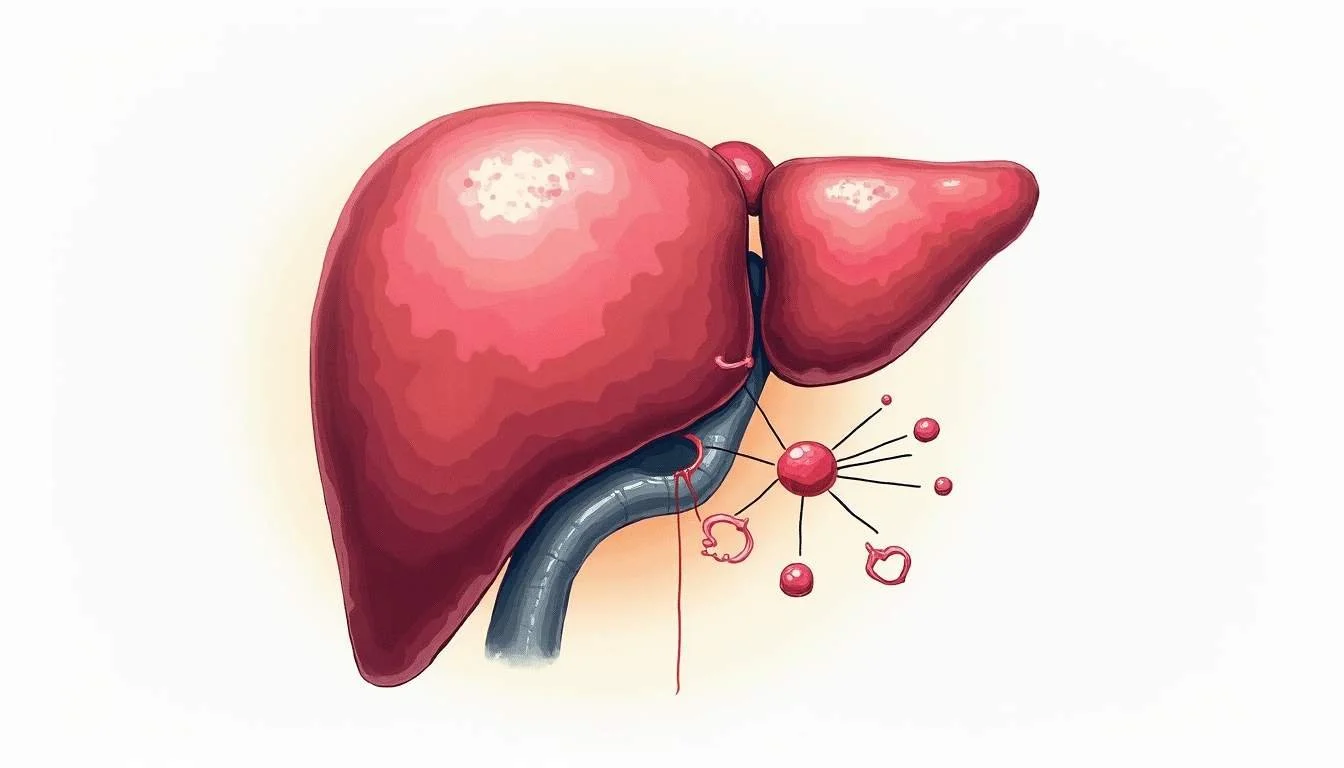
The radiology report lands in the patient portal with a single line that freezes time: “Liver lesion detected on MRI.”
That short sentence often triggers a flood of questions-especially one big one: could it be cancer?
The word “lesion” sounds ominous, but it simply means an area of tissue that looks different from the surrounding liver. Many liver lesions turn out to be harmless. Some are related to scars, blood vessels, or fat. Some are pre-cancerous or cancerous and need treatment. The challenge is telling which is which, and MRI is one of the best tools available for that job. One major analysis found that MRI can correctly detect liver cancer in 473 out of 1,000 adults with chronic liver disease, which is why doctors rely on it so heavily when a new spot appears.
This article walks through what it really means when MRI finds a liver lesion, how radiologists decide whether it looks suspicious, what happens next, and how new imaging technology is changing the need for biopsies. The goal is to replace some of the fear of the unknown with clear information and practical next steps.
“Liver Lesion” vs. “Liver Cancer”: Understanding the Difference
Hearing about a lesion often leads people to assume the worst, but “lesion” is a broad, neutral word. It covers everything from completely benign cysts and hemangiomas (tiny tangles of blood vessels) to pre-cancerous nodules and full-blown tumors. Many lesions discovered on MRI are found by accident when the scan was ordered for something else, and a good portion never cause symptoms or health problems. This is one reason radiology reports use careful, technical wording-radiologists are describing what they see, not labeling it as cancer right away.
Whether a lesion is likely cancer depends on a mix of factors: the patient’s underlying liver condition, any history of hepatitis or heavy alcohol use, family history, blood test results, and the lesion’s appearance on multiple MRI sequences. People with chronic liver disease, such as cirrhosis or metabolic dysfunction-associated steatotic liver disease (MASLD), carry a higher baseline risk of liver cancer than those with a completely healthy liver, so a new lesion in that context gets closer attention. That does not automatically make it cancer; it simply raises the stakes for getting the characterization right.
Radiologists describe lesions in detail-size, location, borders, internal structure, and how they take up contrast. Those details are compared against patterns known to be associated with benign or malignant behavior. The report may sound dense or worrisome, but its real purpose is to arm the treating doctor with enough information to decide whether the lesion can be safely watched, needs more imaging, or should be biopsied or treated.
Why MRI Often Outperforms CT for Liver Lesions
Many people wonder why the doctor ordered an MRI instead of a CT, or why an MRI was recommended after a CT already showed a lesion. MRI looks at the same liver but with different “eyes.” It can show subtle differences in tissue composition-fat, iron, blood flow, scarring-that CT simply cannot see as clearly. In head-to-head comparisons, MRI has shown higher sensitivity for finding liver lesions in general; one study reported that MRI detected lesions with a sensitivity of 79% compared with 72% for CT, reinforcing why doctors often turn to MRI when they really need clarity.
Those differences become even more important for small lesions. Cancerous spots in the liver are often tiny when they first appear, and early treatment tends to work best when they are still small. Research has shown that MRI can outperform CT in detecting intrahepatic lesions, particularly when they measure less than 3 cm in diameter. Small lesions are also the ones most likely to be indeterminate-neither clearly benign nor clearly malignant-so every bit of extra imaging information helps narrow the possibilities.
Another key advantage: MRI does all of this without ionizing radiation. CT scans use X‑rays; MRI uses magnetic fields and radio waves. For someone who needs repeated imaging because of chronic liver disease or regular cancer surveillance, reducing cumulative radiation exposure matters. That is one reason experts have emphasized that MRI is superior to CT for liver cancer diagnosis while avoiding additional radiation exposure. For a single scan the risk from CT is still low, but over many years, safer options become more attractive.
Unsure what your scan results really mean?
We analyze MRI, CT, PET, Ultrasound, and X-ray reports and deliver a clear, easy-to-understand summary in under 1 minute.
- Understand your results in simple language
- Easy to understand explanations
- Get a list of questions to ask your doctor
How Radiologists Decide Whether a Lesion Looks Like Cancer
Once MRI images are available, the radiologist’s job is to turn patterns of brightness and contrast into a probability: very likely benign, clearly malignant, or somewhere in between. Several visual clues matter. Cancerous lesions tend to behave differently from normal liver tissue after contrast is injected, often “lighting up” in the arterial phase and then washing out in later phases, while benign lesions may enhance and fade in more uniform or predictable ways. The lesion’s shape, the smoothness of its borders, and whether there are multiple similar spots all feed into the overall judgment.
To make that judgment more consistent from one radiologist or hospital to another, professional societies created standardized scoring systems. For people at risk of hepatocellular carcinoma (HCC), many centers now use the Liver Imaging Reporting and Data System, known as LI‑RADS, to categorize lesions by how suspicious they look. Rather than simply saying “could be cancer,” the radiologist assigns a category that reflects the level of concern and the strength of imaging evidence, which then guides what the hepatologist or oncologist does next.
These structured systems are especially useful when multiple doctors are involved. A surgeon, for example, can see immediately whether a lesion was considered definitely malignant on imaging or only “probably” malignant, which can influence whether surgery, ablation, or close monitoring makes the most sense. For patients, it can feel reassuring to know that the assessment is not just one person’s gut feeling but the result of agreed-upon criteria applied to the MRI findings.
Why Some Lesions Still Need Biopsy
Even with advanced MRI techniques and structured scoring, some lesions simply do not declare themselves. They may sit in a gray zone-too atypical to confidently call benign, but without enough classic features of cancer to justify aggressive treatment. In those cases, a biopsy may be recommended to look at the tissue under a microscope. This step can feel frightening, but for many people it provides the clearest possible answer and prevents both over-treatment and under-treatment.
Biopsy decisions also take into account the person’s overall health, clotting status, and how easily the lesion can be reached safely. Sometimes the better choice is to repeat MRI after a short interval to see whether the lesion grows or changes in a way that clarifies its nature. Other times, when imaging and blood tests already paint a convincing picture of cancer in a cirrhotic liver, doctors may proceed with treatment based on imaging alone, especially when guidelines and systems like LI‑RADS support that approach.
When MRI Reduces the Need for Biopsy
One of the most promising developments in liver imaging is the rise of multiparametric MRI. Instead of only looking at anatomy and contrast enhancement, these scans also quantify fat, iron, stiffness, and inflammation in the liver. That combination can help characterize both the background liver disease and any focal lesions within it. A large multinational study reported that multiparametric MRI is cost‑effective for diagnosing and managing metabolic dysfunction‑associated steatotic liver disease (MASLD), showing that advanced imaging can guide care without relying as heavily on invasive tests; the study’s sponsor, Perspectum, has highlighted how this approach can support more precise liver care.
Experts involved in that work have pointed out a key benefit: when MRI can provide reliable biomarkers of liver disease activity and scarring, many patients can avoid liver biopsy altogether. As Perspectum’s chief executive, Dr. Rajarshi Banerjee, put it in discussing the study findings, multiparametric MRI biomarkers can “diagnose and improve patient management all while avoiding the need for biopsy in many patients,” as reported through their Nature Communications Medicine publication. That same principle carries over when a focal lesion is found: the more reliable information imaging provides, the less often needles have to enter the liver.
Artificial intelligence tools are starting to add another layer. Early research has tested deep learning systems that read multi‑phase and multi‑sequence MRI to help characterize liver lesions. One such pipeline achieved a mean F1 score of 0.62 on lesion classification tasks, and in some settings even outperformed individual radiologists. These tools are not replacements for experienced human readers, but they may act as a second set of eyes, flagging subtle patterns that can tip the balance toward or away from biopsy.
What This Means for Someone Whose MRI Found a Lesion
For a person staring at a new MRI report, all of this technology talk matters for a simple reason: the better the imaging, the more tailored the next step can be. If multiparametric MRI and expert interpretation can show that a lesion has every feature of a benign hemangioma, that can spare months of anxiety and an invasive biopsy. If, on the other hand, imaging paints a convincing picture of early cancer in someone at high risk, treatment can start sooner, when options tend to be more effective.
Every case is unique, but the big trend is clear. Advanced MRI and structured reporting are steadily shifting liver care toward precision-choosing surveillance, biopsy, local treatments, or surgery based on solid evidence drawn from the images rather than guesswork or reflexive worst‑case assumptions. For patients, that means the phrase “liver lesion on MRI” is becoming less of a mysterious red flag and more of a starting point for a targeted, thoughtful plan.
What to Ask Your Doctor After an MRI Finds a Liver Lesion
Once the initial shock of the report settles, concrete questions can help turn fear into a clearer sense of direction. A good starting point is to ask: “Based on the MRI, how likely do you think this lesion is to be cancer?” Doctors may not give an exact percentage, but they can usually say whether their level of concern is low, moderate, or high. Asking whether a structured system like LI‑RADS was applied can also be useful for people who already have chronic liver disease or are in a surveillance program for hepatocellular carcinoma.
Next, it helps to clarify what the recommended plan actually is and why. If the suggestion is to repeat MRI in a few months, it is worth asking what changes would prompt a shift toward biopsy or treatment. If biopsy is on the table, questions about how it is done, what the risks are, and what information it is expected to provide can make the decision feel less abstract. For lesions already considered highly suspicious, discussing all available treatment options-ablation, embolization, surgery, systemic therapy-can prepare you for what may come next.
People often feel hesitant about asking whether a second radiology opinion might help, but in complex or borderline cases that can be entirely appropriate. Some centers specialize in liver imaging and see large numbers of tricky lesions each year. Given that MRI correctly identifies liver cancer in many but not all high‑risk patients, a fresh set of expert eyes can sometimes reclassify a lesion and change the recommended course.
Coping While Waiting for Answers
The hardest part of a new lesion finding is often the waiting-waiting for the official report, for a specialist appointment, for follow‑up imaging or biopsy results. During that time, it is common to imagine worst‑case scenarios or replay every line of the report over and over. It may help to remember that even in high‑risk groups, most people scanned do not have cancer, and that MRI findings are one important piece of a much bigger puzzle that includes lab tests, history, and physical exam.
Practical steps can also ease the emotional load. Writing down questions in advance makes medical visits more productive and helps ensure important concerns are not forgotten in the moment. Bringing a trusted friend or family member can turn a lonely conversation into a shared problem‑solving session. And when internet searches spiral into late‑night panic, it can be grounding to come back to a simple fact: a liver lesion on MRI is a signal to look more closely, not a final verdict. The combination of modern imaging, structured interpretation, and thoughtful follow‑up gives many people a path through the uncertainty, whether the lesion ultimately proves harmless or demands focused treatment.
Waiting for answers? You don’t have to.
Upload your MRI, CT, PET, Ultrasound, or X-ray report and receive a clear explanation in < 1 minute.
Understand Your Liver Lesion MRI with Ease
At Read My MRI, we understand the anxiety and confusion that can come with finding a liver lesion on your MRI report. That's why we're committed to simplifying the process for you. Our AI-powered platform is designed to translate complex medical reports into straightforward summaries, free of confusing jargon. Whether you're looking for peace of mind or preparing for a discussion with your healthcare provider, Read My MRI is here to help you quickly grasp the details of your diagnosis. Get Your AI MRI Report Now! and take the first step towards clear, comprehensible medical insights.